When most business owners think about their electricity or natural gas bill, they assume the price is set — determined by the utility, non-negotiable, and outside their control. In many parts of the country, that assumption is simply wrong.
Deregulated energy markets give businesses the legal right to choose their energy supplier. That means competition, and competition means the potential for lower rates, better contract terms, and more control over one of your largest operating expenses.
Here is what deregulation actually means, how it works in practice, and what your business should be doing about it.
What Is Energy Deregulation?
Energy deregulation is the process by which a state separates the generation and supply of electricity or natural gas from its delivery. The utility — your local electric or gas company — still owns and maintains the wires, pipes, and infrastructure that deliver energy to your building. That part does not change.
What changes is who you buy the energy itself from. In a deregulated market, licensed third-party suppliers compete for your business. They purchase energy on the wholesale market and sell it to commercial and residential customers at retail rates. Because they are competing, they have an incentive to offer better pricing and terms than the utility's default rate.
In a regulated market, by contrast, the utility controls both delivery and supply. There is no competition, and you pay whatever rate the state public utility commission has approved.
Which States Have Deregulated Energy Markets?
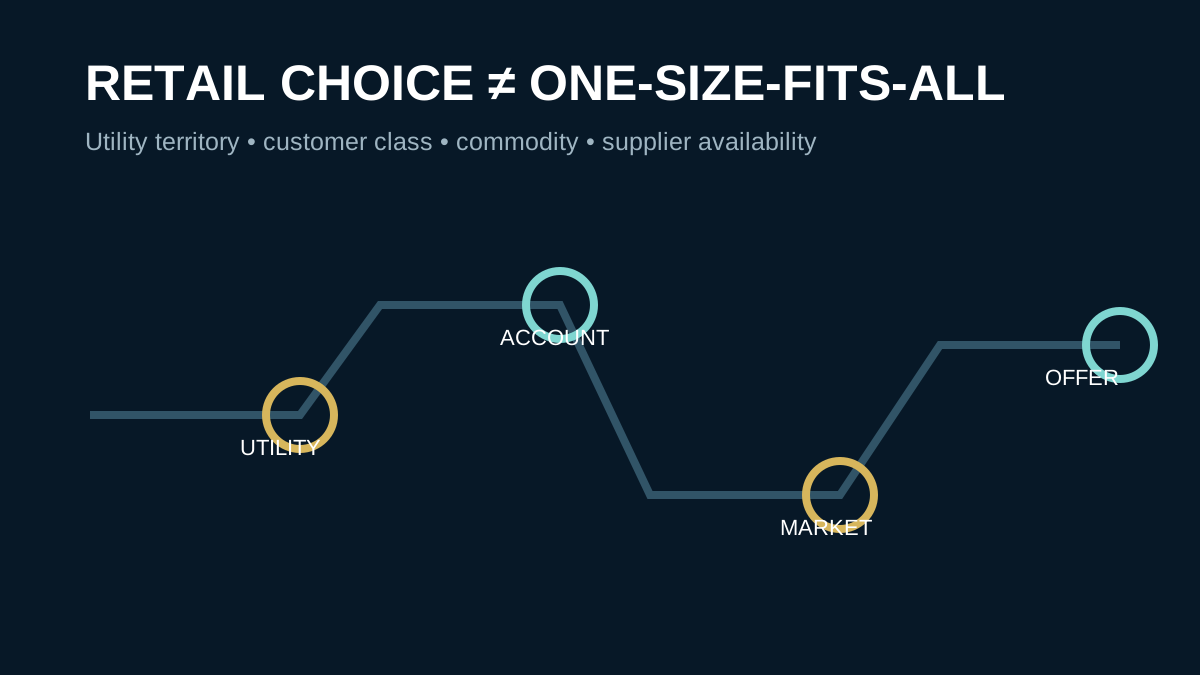
As of 2026, the following states have fully or partially deregulated commercial electricity markets:
- Texas — Fully deregulated for most of the state (ERCOT grid); one of the most competitive markets in the country
- Pennsylvania — Fully deregulated; strong supplier competition for commercial accounts
- New Jersey — Fully deregulated for electricity and natural gas
- Maryland — Fully deregulated; active supplier market
- Ohio — Fully deregulated for electricity; partial for natural gas
- Illinois — Fully deregulated; Chicago-area businesses have significant supplier options
- New York — Deregulated; competitive market especially in Con Edison and National Grid territories
- Massachusetts — Deregulated; strong commercial supplier competition
- Connecticut — Deregulated electricity market
- Delaware — Deregulated electricity and natural gas
- Washington, D.C. — Deregulated for both electricity and natural gas
- Michigan — Partially deregulated; choice available for larger commercial accounts
- Georgia — Deregulated natural gas; electricity remains regulated
If your business operates in one of these states, you are almost certainly eligible to choose your supplier — and if you have not done so recently, you may be paying more than necessary.
How Does the Pricing Work?
When you choose a third-party supplier in a deregulated market, your bill typically has two components:
Supply charges — This is the cost of the energy itself: the electricity or natural gas you consume. This is the portion you can negotiate. Your chosen supplier sets this rate, which may be fixed, variable, or indexed to a market benchmark.
Delivery charges — This is what you pay the utility for maintaining the infrastructure and delivering energy to your location. This portion is regulated and does not change regardless of which supplier you choose.
The key insight: switching suppliers does not affect your delivery charges, your service reliability, or your relationship with the utility for outages and repairs. You are only changing who you buy the commodity from.
Fixed vs. Variable Rates: What Is the Difference?
One of the most important decisions in a deregulated market is whether to lock in a fixed rate or accept a variable rate.
Fixed-rate contracts lock your supply price for a defined term — typically 12, 24, or 36 months. Your rate does not change regardless of what happens in the wholesale market. This provides budget certainty and protects against price spikes.
Variable-rate contracts fluctuate with market conditions. When wholesale prices are low, you may pay less than a fixed rate. When they rise — due to extreme weather, supply disruptions, or grid events — your rate rises with them. Variable plans offer flexibility but no price ceiling.
Fixed and variable structures allocate market risk differently. Fixed pricing generally emphasizes budget predictability, while variable or index exposure may be appropriate for organizations with different risk tolerances and procurement capabilities. Neither structure is automatically right for most commercial accounts.
What Role Does a Commercial Energy Broker Play?
Navigating a deregulated market takes time and market knowledge that most business owners simply do not have. That is where a commercial energy broker adds value.
A licensed broker works on your behalf to:
- Obtain competitive quotes from multiple licensed suppliers simultaneously
- Translate complex contract terms into plain language
- Identify the rate structure that fits your usage profile and risk tolerance
- Manage the enrollment process and contract timeline
- Monitor your account and alert you when it is time to re-shop
Critically, brokers are typically compensated by the supplier you choose — not by you. The rate you receive already reflects the broker's fee, and in most cases the competitive pressure among suppliers means you still pay less than the utility's default rate.
Common Mistakes Businesses Make in Deregulated Markets
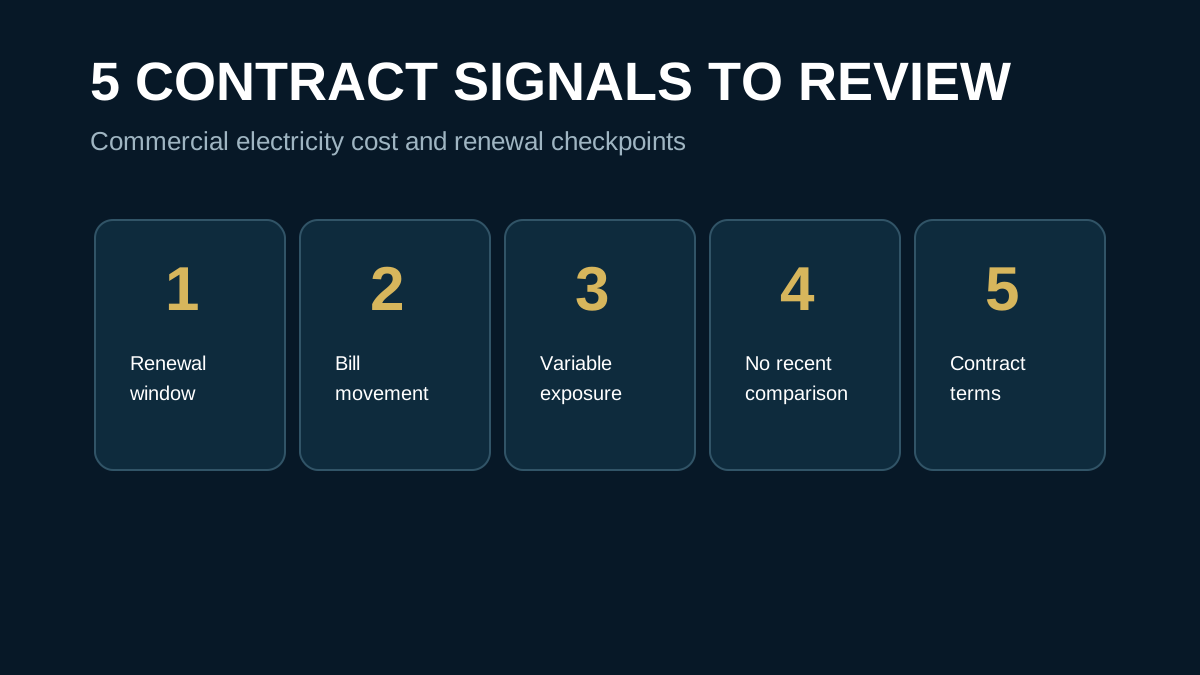
Letting contracts auto-renew. Most commercial energy contracts include auto-renewal clauses. If you do not act before the expiration window closes — often 30 to 90 days before the end date — your contract rolls over, sometimes at a higher rate or into a variable plan. Set a calendar reminder 90 days before your contract expires.
Choosing based on rate alone. The lowest rate is not always the best deal. Contract length, cancellation terms, rate type, and supplier reliability all matter. A slightly higher fixed rate from a reputable supplier often beats a lower variable rate that could spike.
Assuming the utility's rate is competitive. In most deregulated states, the utility's default supply rate — called the "price to compare" or "standard offer" — is not designed to be the best available option. It is a fallback for customers who have not chosen a supplier. Competing suppliers routinely beat it.
Waiting until the last minute. A short decision window can reduce the time available to gather usage, review contract language, compare qualified supplier structures, and complete internal approvals. Start with the actual notice and expiration provisions rather than assuming a universal shopping window.
How to Get Started
If your business is in a deregulated state and you have not reviewed your energy options recently, the process is straightforward:
1. Locate your current energy contract and note the expiration date, current rate, and rate type
2. Identify whether you are in a deregulated market (see the state list above)
3. Request quotes from multiple licensed suppliers — or work with a broker who can do this for you
4. Compare the offers against your current rate and the utility's price to compare
5. Enroll with the supplier that offers the best combination of rate, terms, and reliability
The amount of work and potential economic outcome vary by account, market, utility, usage profile, contract terms, and timing.
If you would like to see what options are available for your specific account, request a commercial energy rate review to review qualified options for your account.