Your electricity bill arrives every month, you pay it, and you move on. It's one of those overhead costs that feels fixed — like rent or insurance. In competitive markets, the supply portion of a commercial electricity account may be contract-based, so the current agreement is worth reviewing rather than treating the entire bill as fixed.
Business owners may not have time to monitor market conditions, compare contract structures, or track renewal provisions. That can leave an account on terms that no longer match the business's usage, risk tolerance, or procurement timeline.
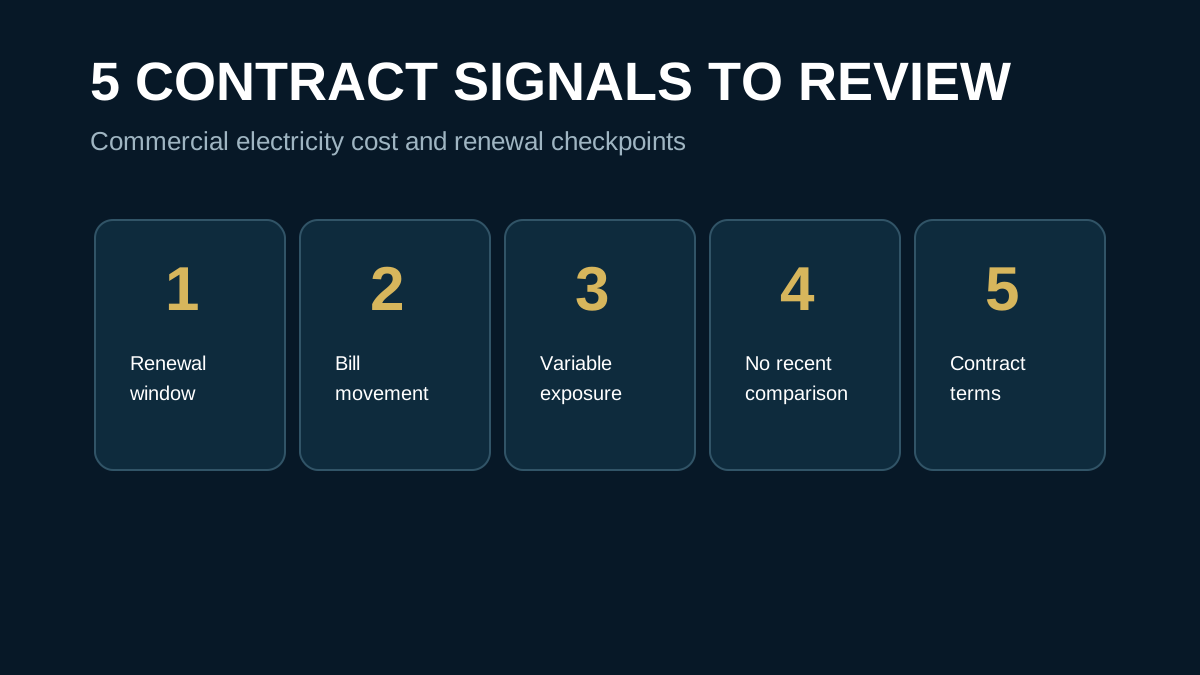
Here are five signs your business may be overpaying — and what you can do about each one.
1. You Haven't Reviewed Your Energy Contract in Over 12 Months
Energy markets move. Supplier pricing changes. New entrants compete for commercial accounts. If you signed a contract more than a year ago and have not reviewed it since, current market conditions and your own operating profile may now differ from the assumptions behind that agreement.
This is especially true in deregulated energy markets, where multiple suppliers compete for your business. In regulated markets, rate structures still change, and your utility may offer programs or rate classes you've never been enrolled in.
What to do: Pull out your current contract and note the expiration date, rate type (fixed or variable), and any auto-renewal clauses. If the contract is approaching expiration — or has already expired — review the notice provisions, renewal terms, and current account-specific options before making a change.
2. Your Bill Has Gone Up But Your Usage Hasn't
If kilowatt-hour consumption is similar but the total bill is rising, review the bill components before assuming the cause. Supply price, delivery charges, demand charges, taxes, riders, and other factors can move independently.
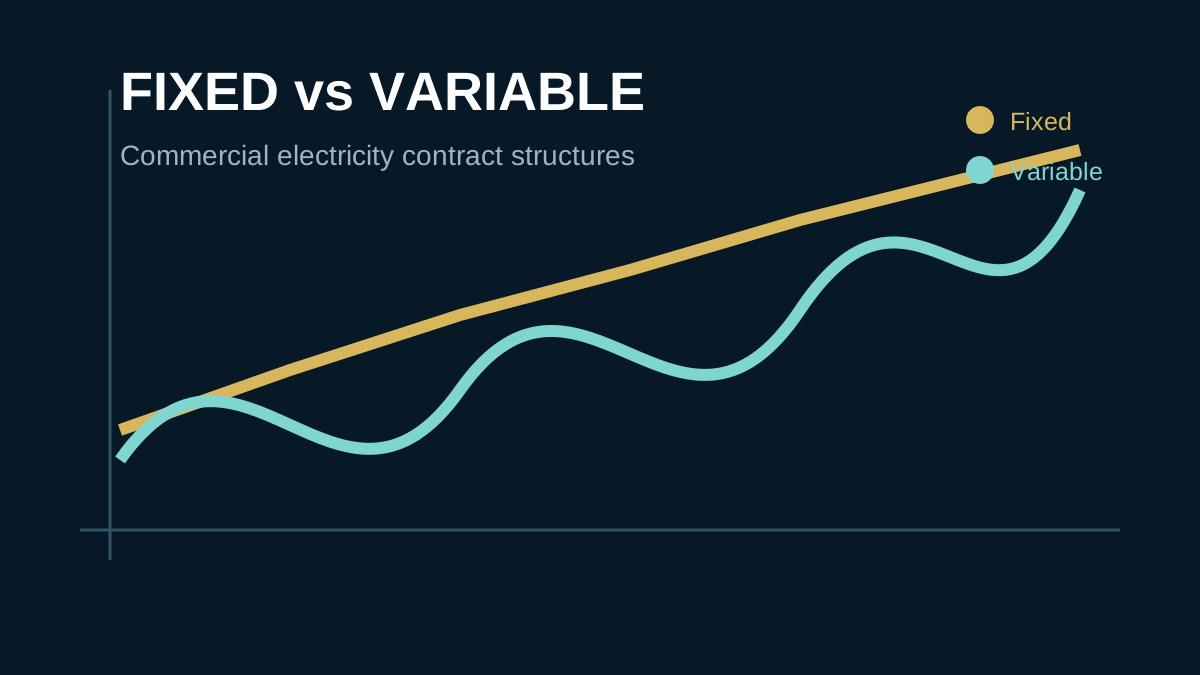
Variable-rate contracts are a common culprit. They offer flexibility but no price ceiling, meaning your rate can rise with wholesale market conditions. What started as a competitive rate can quietly become an expensive one over 12 to 18 months.
What to do: Compare your current rate (in cents per kWh) to what you were paying 12 months ago. If the supply rate changed while usage remained similar, identify the current pricing mechanism and compare fixed, index, or other qualified structures against your risk and budget requirements.
3. You're on a Variable-Rate Plan With No Price Ceiling
Variable rates aren't inherently bad — they can be advantageous when wholesale energy prices are low. But without a price cap, you're fully exposed to market volatility. And commercial energy markets can be volatile.
An uncapped variable structure can increase exposure to changing market conditions. Review the formula, reset frequency, caps, floors, and other contract terms before deciding whether that exposure fits the business.
What to do: Ask your supplier whether your current plan has a price cap or ceiling. If it doesn't, request a quote for a fixed-rate alternative. A fixed structure may provide more budget predictability, while variable or index exposure may suit a different risk profile. The choice depends on the account and contract terms.
4. You've Never Compared Rates From Competing Suppliers
If you have not compared account-specific supplier structures recently, you may not know how current qualified options differ in price, term, risk allocation, or contract language.
In deregulated states, multiple licensed suppliers compete for commercial accounts. They offer different rate structures, contract lengths, and incentives. A disciplined comparison can show how available structures differ for the account.
What to do: Request comparable, account-specific supplier structures using the same utility, usage profile, term assumptions, and pricing window, then review the results side by side.
5. Your Current Contract Is Expiring Within 6 Months
Contract expiration creates a decision point. Some agreements include notice or auto-renewal provisions, so the actual contract language should be reviewed before the deadline rather than assumed.
If the agreement is approaching expiration, allow enough time to gather account data, review current market context, compare qualified supplier structures, and complete internal approvals.
What to do: Record the expiration date, notice requirements, and renewal provisions, then start the review early enough for your organization to compare and approve qualified options. Do not assume a universal 90-day window; use the actual contract.
The Bottom Line
A higher bill or older contract does not prove that an account is overpaying. The useful question is whether the current supply structure still fits the account after reviewing utility charges, usage, contract terms, and qualified supplier options.
A commercial energy broker can help organize the comparison and explain differences among qualified supplier structures. Compensation, fees, and contract terms should be disclosed in the applicable procurement process rather than assumed from general website copy.
If any of the five signs above sound familiar, request a commercial energy rate review and review what qualified options are available for your account.