Electricity is a necessary operating expense for most businesses, but the price a company pays for electricity can vary significantly depending on location, usage, contract structure, supplier, and market conditions.
For businesses operating in competitive or deregulated electricity markets, choosing an electricity supplier is not always as simple as selecting the lowest rate.
A commercial electricity agreement may include different contract lengths, pricing structures, renewal terms, usage requirements, and other conditions that can affect what your business ultimately pays.
That is why comparing commercial electricity rates should involve more than looking at a single number.
This guide explains how business owners can evaluate commercial electricity offers in 2026 and make a more informed energy purchasing decision.
What Are Commercial Electricity Rates?
Commercial electricity rates are the prices businesses pay for electricity used at offices, restaurants, warehouses, manufacturing facilities, retail stores, medical practices, hotels, and other commercial properties.
Your electricity bill generally includes several components.
Depending on your market and utility, those costs may include:
- Electricity supply
- Utility delivery charges
- Transmission charges
- Distribution charges
- Taxes
- Regulatory fees
- Capacity-related costs
- Other utility or market charges
In competitive electricity markets, businesses may be able to choose the company that supplies the electricity itself.
The local utility typically continues delivering the electricity, maintaining the infrastructure, responding to outages, and issuing or supporting the utility bill.
This means changing suppliers does not usually change the physical electricity reaching your building.
Instead, you are changing the commercial agreement governing the supply portion of your electricity costs.
Why Commercial Electricity Rates Can Differ Between Businesses
Two businesses located in the same city can receive different electricity offers.
Several factors may affect commercial electricity pricing.
1. Electricity usage
Suppliers often evaluate how much electricity a business consumes.
A small professional office and a large manufacturing facility may have very different purchasing profiles.
Higher-volume commercial accounts may also receive different pricing structures than smaller accounts.
2. Usage pattern
It is not only how much electricity your business uses.
When you use it can also matter.
A company operating primarily during normal business hours may have a different load profile than a restaurant, hotel, warehouse, or industrial facility operating nights and weekends.
Suppliers may consider these consumption patterns when pricing an account.
3. Geographic location
Electricity markets vary by state, utility territory, transmission zone, and local market conditions.
A rate available to a business in Pennsylvania may not be available to a similar business in Maryland, Ohio, Illinois, or Texas.
That is why commercial electricity comparisons should be based on the specific service address and utility account.
4. Contract length
Businesses can often choose from several electricity contract lengths.
Common terms may include:
- 12 months
- 24 months
- 36 months
- 48 months
- Longer customized terms
A longer contract may provide greater budget certainty, but it can also keep a business committed to the same pricing structure for a longer period.
A shorter agreement may provide greater flexibility but expose the business to market conditions sooner.
There is no single contract length that is best for every company.
5. Market conditions
Wholesale electricity markets constantly change.
Weather, fuel prices, electricity demand, generation availability, transmission constraints, economic activity, and other market forces can influence supplier pricing.
The commercial rate available today may therefore differ from the rate available several months from now.
Compare More Than the Price Per Kilowatt-Hour
The rate is important, but it should not be the only factor used when evaluating an electricity contract.
Before signing an agreement, businesses should understand exactly what they are comparing.
Consider the following.
Fixed vs. variable pricing
A fixed-price contract generally establishes a defined supply price or pricing formula for the contract period, subject to the specific terms of the agreement.
This can make budgeting more predictable.
A variable-rate product may change based on market conditions or another pricing mechanism.
Variable pricing can provide flexibility, but it may also expose the business to greater price movement.
Business owners should understand how the price is calculated before choosing either structure.
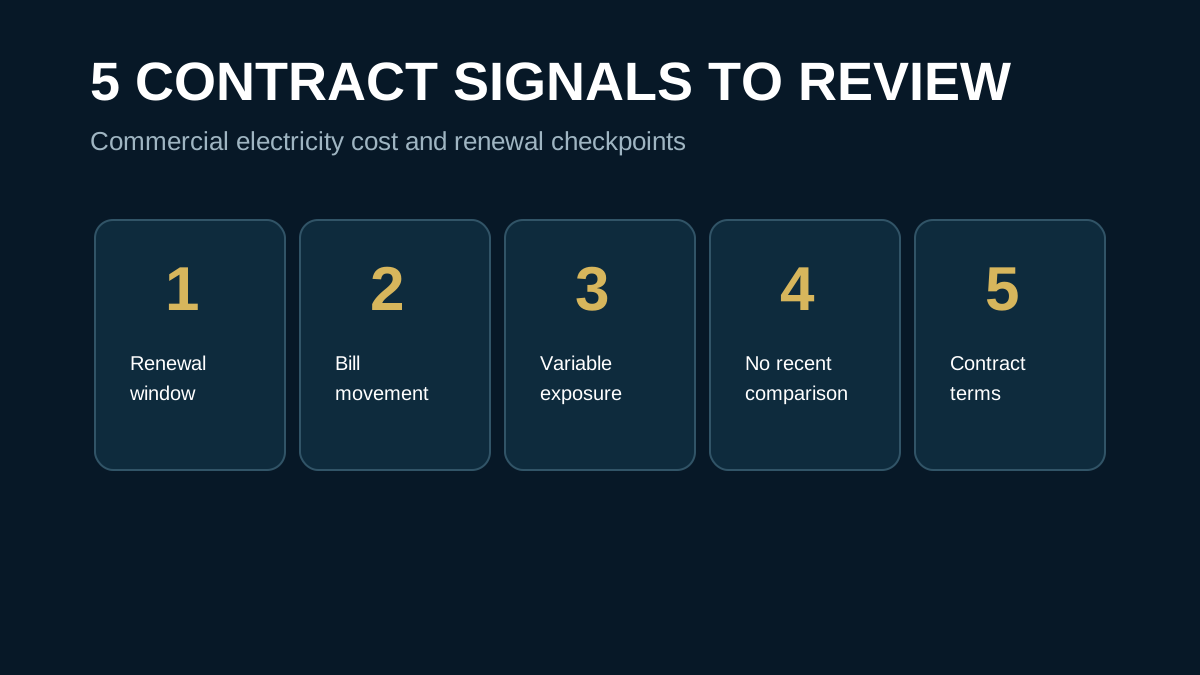
Contract expiration date
Always know when your current energy agreement expires.
Waiting until the last minute can reduce the number of options available and create unnecessary pressure during the renewal process.
Businesses may benefit from reviewing the market well before the contract expiration date.
Early termination provisions
Commercial electricity contracts can include termination provisions.
Before signing, review what happens if your business:
- Moves
- Closes a location
- Sells the property
- Changes ownership
- Reduces operations
- Terminates the agreement early
Understanding these provisions before signing can prevent surprises later.
Usage requirements
Some supplier contracts may include language related to usage levels or changes in consumption.
This can be especially important for businesses whose operations may expand, contract, or change significantly during the contract term.
Renewal terms
Do not overlook automatic renewal provisions.
Understand what happens when the contract expires.
Ask whether the agreement:
- Automatically renews
- Changes to a variable rate
- Requires advance cancellation
- Requires a new agreement
Energy procurement should be managed proactively rather than addressed only after a contract has expired.
Step 1: Review Your Current Electricity Bill
Before comparing rates, gather a recent commercial electricity bill.
Useful information may include:
- Business name
- Service address
- Utility company
- Account number
- Current supplier
- Current supply rate
- Contract expiration date
- Monthly electricity usage
Historical usage information can be especially helpful when suppliers prepare pricing.
You do not necessarily need to understand every line of your bill before beginning the comparison process.
A commercial energy professional can help identify the relevant information.
Step 2: Confirm Your Current Contract Status
One of the most important questions is:
When does your current electricity agreement expire?
If your business already has a supplier contract, switching immediately may not make financial sense if the agreement contains termination charges.
Instead, businesses often compare future pricing for the period beginning after the current contract expires.
Starting the process early gives you more time to evaluate options without making a rushed decision.
Step 3: Compare Multiple Commercial Electricity Suppliers
One supplier quote does not represent the entire market.
When possible, businesses should compare multiple suppliers and contract structures.
Consider comparing:
- Supply price
- Contract duration
- Fixed or variable structure
- Supplier reputation
- Renewal provisions
- Early termination language
- Usage requirements
- Billing structure
A slightly lower advertised rate is not automatically the better contract.
The entire agreement matters.
Step 4: Compare Contract Terms Side by Side
A useful commercial energy comparison should make it easy to evaluate competing offers.
A slightly lower advertised rate is not automatically the better contract. The entire agreement matters.
The important point is that businesses should compare offers using the same criteria.
Step 5: Consider Timing
Timing can influence commercial energy purchasing decisions.
Nobody can reliably predict every movement in electricity markets.
Instead of trying to identify a perfect market bottom, businesses can focus on disciplined procurement.
That means:
- Knowing when the current contract expires
- Reviewing the market before the renewal deadline
- Comparing several available options
- Understanding contract terms
- Selecting a structure that matches the company's risk tolerance and operating plans
Waiting until the final days before expiration can limit flexibility.
Step 6: Understand Your Business's Priorities
The lowest possible price is not always the only objective.
Different companies have different priorities.
A business may prioritize:
- Budget predictability
- Shorter contract commitments
- Long-term price stability
- Flexibility for future expansion
- Multiple-location procurement
- Simplified contract management
- Renewable or sustainability options
Your electricity strategy should reflect your company's operational and financial needs.
How a Commercial Energy Broker Can Help
Commercial electricity markets can require significant research.
A commercial energy broker can help businesses evaluate supplier options without requiring the business owner to contact each supplier individually.
A broker may help with:
- Reviewing current energy bills
- Identifying contract expiration dates
- Comparing supplier offers
- Explaining contract structures
- Evaluating different term lengths
- Monitoring renewal opportunities
- Supporting the procurement process
The objective should not simply be to present the lowest number.
A useful broker comparison should help the business understand the available options and the tradeoffs between them.
Questions to Ask Before Signing a Commercial Electricity Contract
Before accepting an electricity offer, consider asking:
1. Is the rate fixed or variable?
2. How long is the contract?
3. When does service begin?
4. Are there early termination provisions?
5. Are there minimum or maximum usage requirements?
6. What happens if my business moves?
7. What happens at the end of the contract?
8. Does the agreement automatically renew?
9. Are there additional supplier charges?
10. Who should I contact if I have questions during the contract?
Do not hesitate to ask for clarification before signing.
Commercial energy agreements can create multi-year financial commitments.
Common Commercial Electricity Shopping Mistakes
Waiting until the contract expires
Waiting too long can reduce your ability to carefully compare offers.
Looking only at the lowest rate
A low rate may appear attractive, but the contract terms should also be reviewed.
Ignoring the contract term
A rate should always be considered together with the length of the agreement.
Forgetting renewal provisions
Businesses sometimes discover too late that an agreement renewed automatically or moved to another pricing structure.
Comparing offers from different dates
Energy markets can move quickly.
Supplier offers obtained weeks apart may reflect different market conditions.
When possible, compare offers generated within a similar time frame.
Not reviewing your operational plans
A company planning to move, expand, close a facility, or significantly change usage should consider those plans before signing a long-term agreement.
When Should a Business Start Comparing Electricity Rates?
There is no universal timeline because commercial contracts and markets vary.
However, businesses should generally avoid waiting until the final moment before expiration.
A proactive approach gives the company time to:
- Review existing obligations
- Gather usage information
- Compare suppliers
- Evaluate market conditions
- Review contract language
- Make a deliberate decision
If you are unsure when your current agreement expires, start by reviewing your electricity bill or contacting your supplier.
Commercial Electricity Rates in 2026
Businesses entering the electricity market in 2026 should expect pricing to continue responding to changing supply, demand, fuel, weather, infrastructure, and regional market conditions.
Rather than trying to predict every market movement, business owners can focus on factors they can control.
Those include:
- Comparing multiple options
- Understanding their existing contract
- Starting the renewal process early
- Reviewing contract terms carefully
- Choosing a pricing structure aligned with business objectives
A disciplined procurement process can help your organization make a more informed decision regardless of short-term market movement.
Request a Commercial Energy Rate Review
If your business operates in a competitive energy market, Zen Energy Co. can help you review available commercial electricity and natural gas options.
We compare supplier options based on your business information and help you understand the available contract structures.
There is no obligation to request a review.
You can also explore our Market Insights for additional information about commercial electricity and natural gas markets.
Final Thoughts
Comparing commercial electricity rates involves more than finding the lowest advertised price.
Business owners should evaluate the rate, supplier, contract duration, pricing structure, renewal provisions, usage requirements, and operational needs together.
The most important step is starting early enough to make the decision deliberately.
If your commercial electricity agreement is approaching renewal — or you are unsure whether your current rate is competitive — a market comparison can help you understand your options before making your next energy purchasing decision.
Zen Energy Co. helps businesses compare commercial electricity and natural gas options in competitive energy markets.